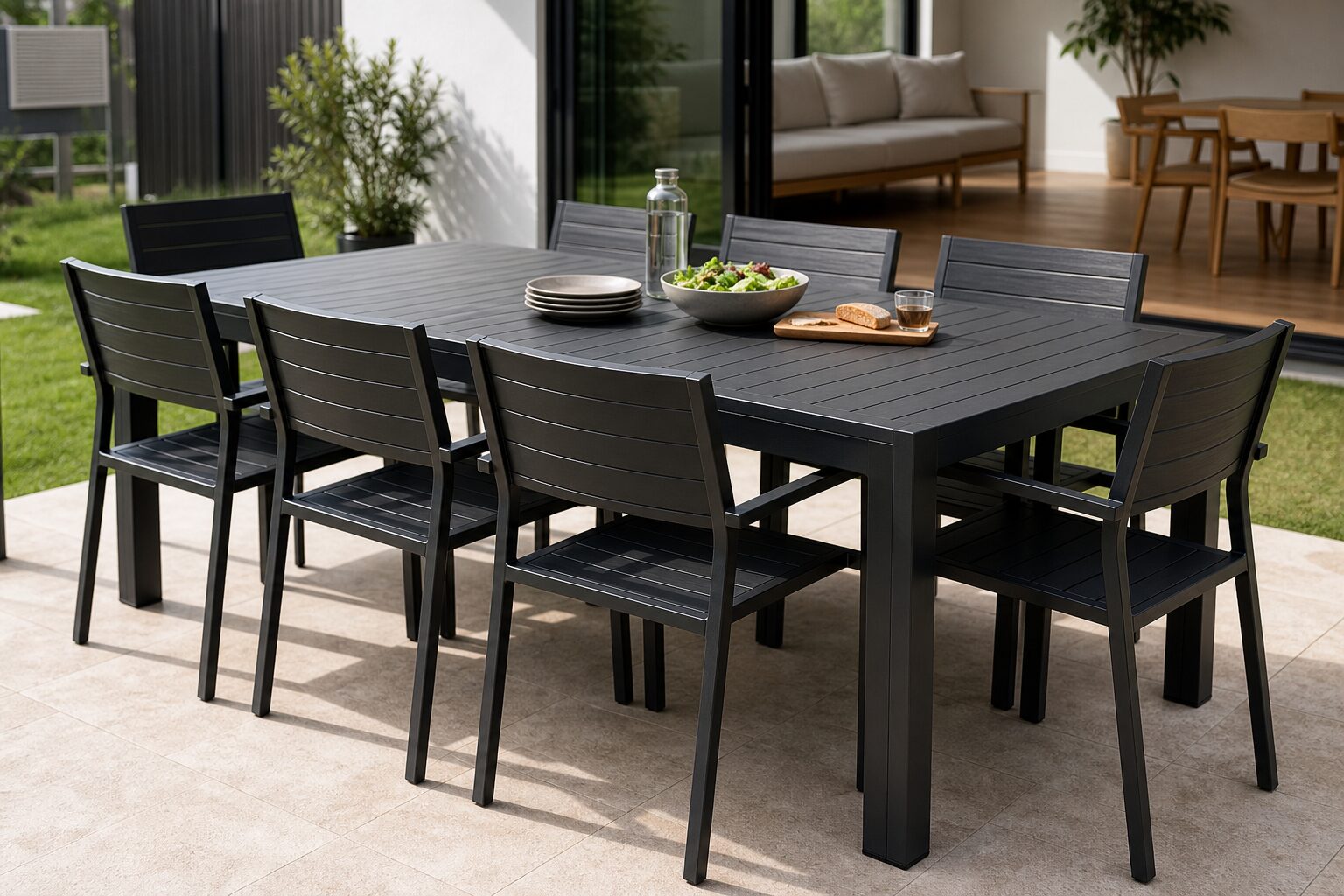
Had a customer call last month asking why her “outdoor” table from a big-box store had gone grey and wobbly after one Melbourne summer. She’d bought it thinking any table with “outdoor” on the label would survive rain, sun and a few backyard barbecues. Turns out the legs were pressed steel with a thin powder coat, and the top was some unnamed timber that hadn’t seen a drop of oil since the factory. Eighteen months, and it was firewood.
That’s the thing nobody tells first-time buyers: not all outdoor dining tables are built the same, and the difference shows up fast once weather gets involved. If you’re kitting out a first patio, a rental property, or a small cafe courtyard, here’s what actually matters before you hand over money.
Start With the Material, Not the Look
Every outdoor table looks decent in a photo. What separates a table that lasts five years from one that lasts one season is what’s holding it together underneath.
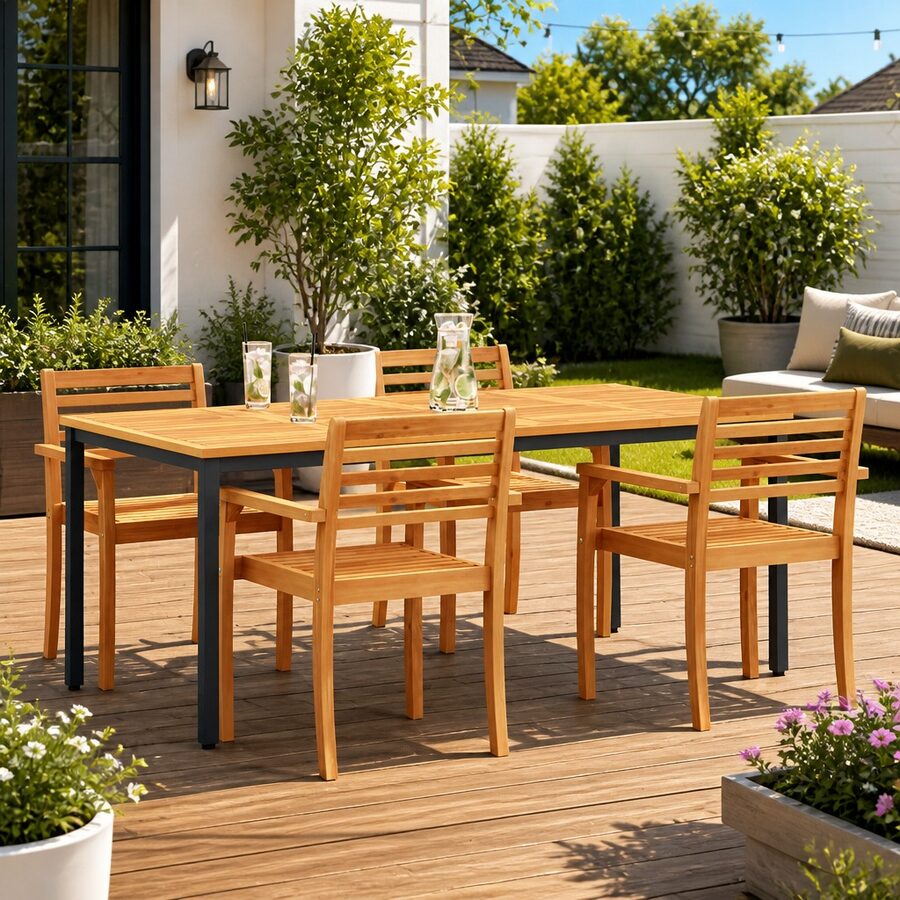
- Solid acacia wood — dense, naturally oily, resists rot and insects far better than pine or rubberwood. It’s the timber most commercial outdoor furniture actually uses because it doesn’t need constant babying.
- Powder-coated steel legs — proper powder coating (not just spray paint) stops rust forming where legs meet concrete or grass, which is usually the first failure point.
- Bamboo — lighter, renewable, and holds up well in covered or semi-sheltered areas, though it prefers a bit more protection from constant direct rain than acacia.
Our Practical Outdoor Dining Table uses exactly this combination — solid acacia wood top on steel legs, 180x90cm, built to seat six comfortably without anyone’s elbows fighting over space. It’s the kind of table that doesn’t need explaining to a tradesperson putting it together; four legs, a few bolts, done in fifteen minutes.
Get the Size Right Before You Buy
This is where most first-time buyers go wrong. They measure the space but forget to account for chairs pulled out, foot traffic, and the fact that six adults need more room than the table dimensions suggest on paper.
- 4 people: around 120–140cm length is workable if space is tight.
- 6 people: 180cm is the sweet spot — enough length for three-a-side seating without cramming.
- 8+ people: you’re either going longer than 200cm or looking at two smaller tables pushed together, which actually works well for cafes needing flexible seating.
Leave at least 90cm clearance around the table on all sides for chairs to pull out and people to walk past without turning sideways. It sounds obvious until you’ve measured a courtyard and realised the table barely fits with zero room to move.
Weather Reality Check
Australian conditions are hard on outdoor furniture — UV that fades and dries out timber, sudden downpours, and coastal salt air if you’re anywhere near the water. A few habits stretch the life of any outdoor table by years, not months:
- Oil acacia timber tops every 6–12 months depending on sun exposure. A basic teak or timber oil from the hardware store does the job.
- Use a breathable outdoor cover in winter or when the table’s not in daily use — plastic tarps trap moisture and cause mould.
- Check steel leg feet aren’t sitting in standing water after rain. Pavers or a slight tilt in the ground helps drainage.
None of this is difficult, but skipping it is exactly how tables end up looking tired within a year.
Matching Furniture to How You’ll Actually Use It
A dining table rarely works alone. If you’re setting up a proper outdoor entertaining area — whether that’s a rental backyard, an Airbnb, or a small venue courtyard — think about what sits alongside it.
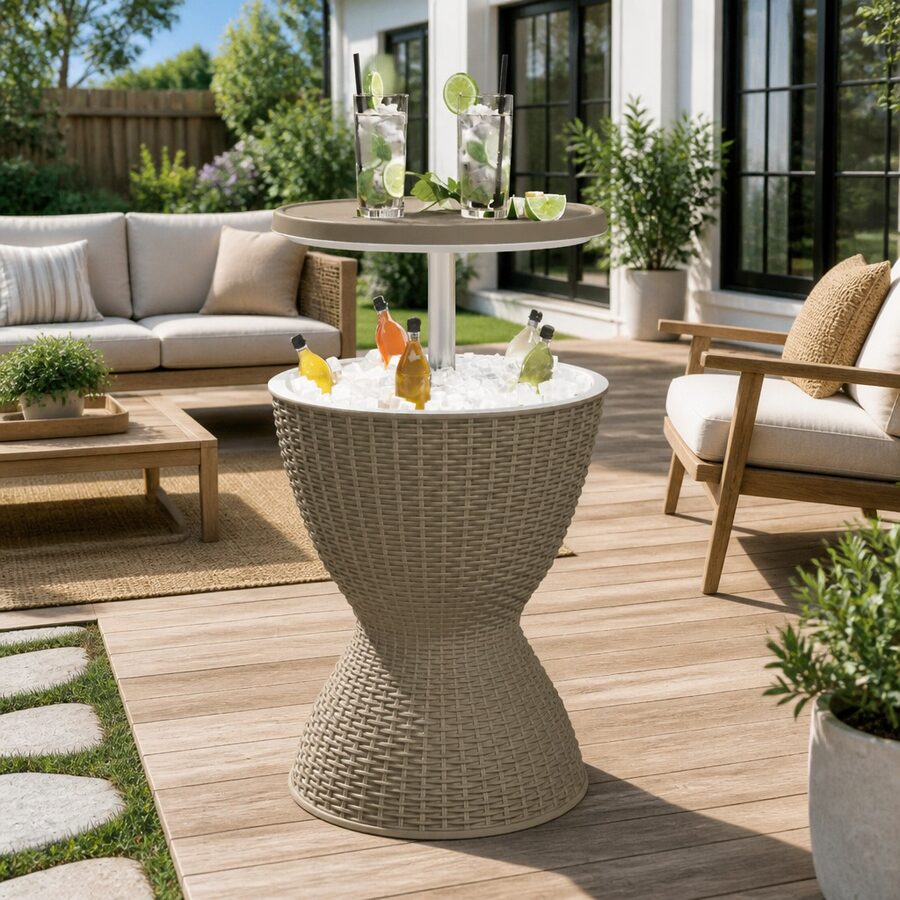
For casual drinks or a cafe corner where guests aren’t sitting for a full meal, our 3-in-1 Ice Cooler Table doubles as a coffee table, cocktail table, or literal ice cooler for drinks — genuinely handy for outdoor bars, function spaces, or just a backyard that hosts a lot of people over summer. It’s polypropylene, so it shrugs off weather without any oiling or maintenance at all.
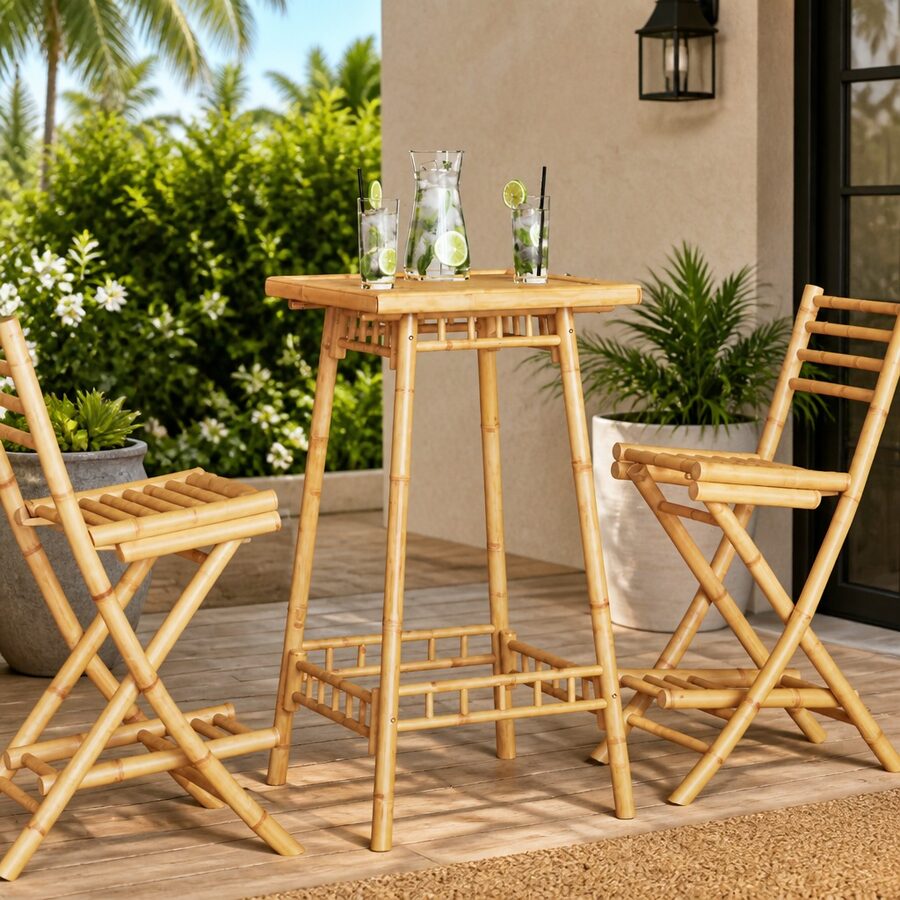
If you’re working with a smaller footprint — apartment balcony, narrow courtyard, or a bar-style seating nook — the Bamboo Outdoor Bar Table at 55x55x100cm gives you standing-height seating without eating up floor space. It pairs well next to a full dining setup for overflow guests, or works as a standalone spot for a quick coffee or drink.
Buying for a Whole Space, Not Just One Table
If you’re furnishing more than one area — say a cafe with six tables, or a new-build home with both a dining zone and a bar corner — think in terms of landed cost per unit rather than the sticker price on a single item. Buying in volume, from one dispatch point, cuts down on freight headaches and mismatched deliveries. It’s also just easier to budget when every table, chair and accessory ships from the same Melbourne warehouse instead of juggling five different suppliers with five different delivery windows.
What to Check Before You Click Buy
- Confirm the timber type and leg material — don’t assume “outdoor” means weatherproof.
- Measure your space including clearance, not just the footprint of the table itself.
- Check assembly requirements — flat-pack is standard, but some designs need two people for the tabletop.
- Factor in a basic maintenance routine so the table still looks good in three years, not three months.
A solid acacia and steel dining table, a weatherproof cooler table for drinks, and a compact bar table for overflow seating covers most outdoor setups without overcomplicating things. Start with what you’ll actually use daily, then build out from there.