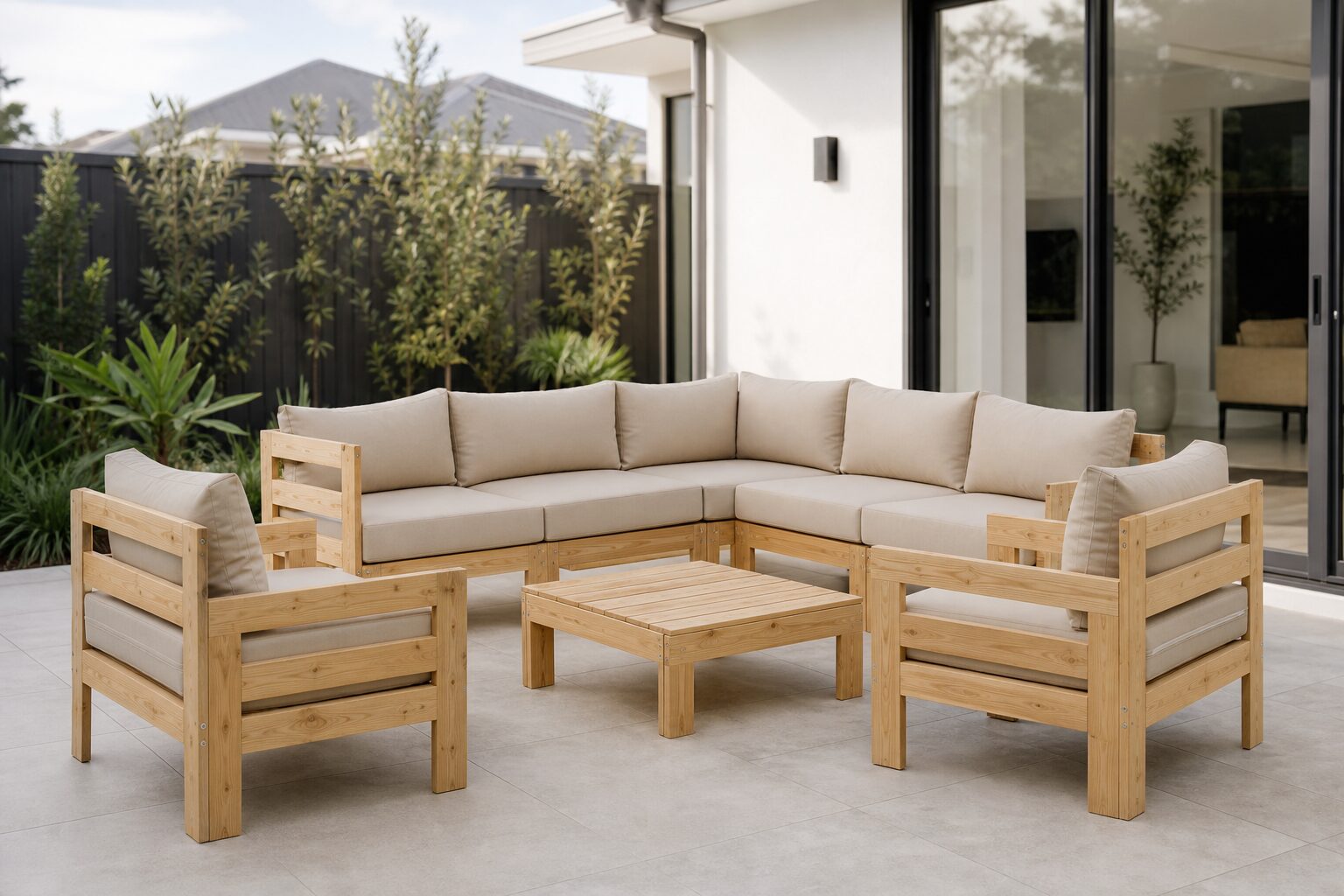
Last spring we had a builder ring up asking what would fill a 40-square-metre courtyard for a new apartment complex — eight units, one shared alfresco area, and a budget that made him wince every time he said it out loud. He didn’t want eight separate outdoor settings. He wanted one big modular arrangement people could rearrange themselves. That’s how I ended up putting together the 12-piece pinewood outdoor lounge set on a Tuesday afternoon in our warehouse, mostly to see if it’d actually work the way the spec sheet promised.
It did, mostly. But there were a few things I only learned by having the boxes open on concrete, not by reading the listing.
What’s actually in a 12-piece outdoor lounge set
People assume “12-piece” means 12 chairs. It doesn’t. This 12-piece pinewood lounge set is a modular system — corner units, armless middle sections, a coffee table, and the cushions counted separately in the piece total. Solid pinewood frame, finished in black, built to be configured as an L-shape, a U-shape, or split into two smaller groupings if you’ve got an odd-shaped space.
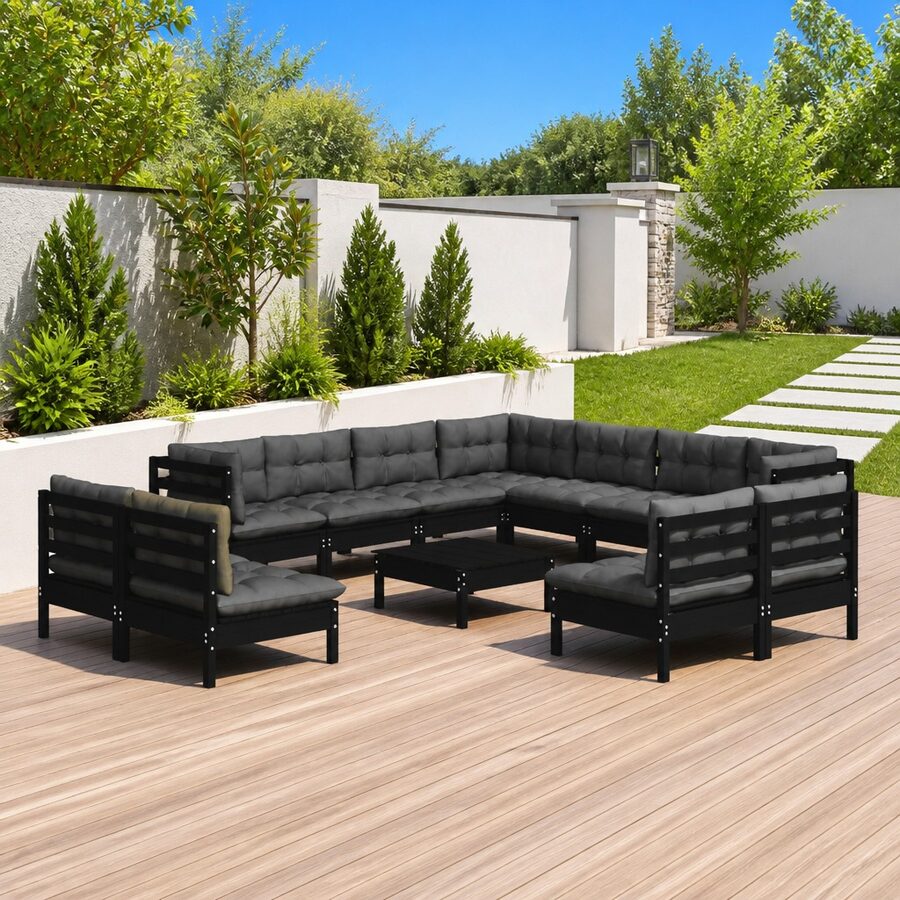
That modularity is the whole point. We laid it out as a big U facing the courtyard wall first, then reconfigured it into two three-seater arrangements with the coffee table in the middle 20 minutes later, just swapping which sections butt up against which. No tools needed for that part — the tools only come out once, at assembly.
Assembly — realistic timing
Budget 90 minutes to two hours for the full set if it’s your first time, working solo. With a second person it drops closer to an hour. Most of that time is cushion fitting and tightening bolts on the frame joins, not the actual construction — pinewood frames come mostly pre-cut with predrilled holes, so it’s more like assembling flat-pack shelving than building furniture from scratch.
- Frame sections bolt together at the base and back rail
- Coffee table is a separate quick-assembly piece
- Cushions are Velcro or tie-strapped to the frame, not just sitting loose
- A cordless drill saves your wrist — hand-tightening 40-odd bolts isn’t fun
Pinewood outdoors — what actually happens to it
Solid pinewood is a different proposition to poly rattan or bamboo, and it’s worth knowing the difference before you commit a courtyard to it. Pine is a softwood — it’s light, it’s cheaper to produce at scale, and the black finish on this set is a protective coating, not just paint. But it’s still timber, which means it moves with humidity and needs a yearly check for finish wear, especially on any Melbourne-facing balcony that cops full afternoon sun in summer.
What I tell people: if it’s under any kind of cover — a pergola, an awning, a recessed balcony — this frame will outlast the cushions easily. If it’s fully exposed to rain and harsh sun year-round with no cover at all, plan on resealing the timber every 12 to 18 months, same as you would a timber deck. That’s not a flaw, it’s just what timber outdoor furniture asks of you in exchange for looking a lot better than plastic.
Cushions — the bit everyone forgets to ask about
The cushions on this set are outdoor-rated fabric over foam, water-resistant rather than fully waterproof. Leave them out in a downpour and they’ll survive; leave them soaking for three days straight and the foam will hold moisture and start to smell. We tell every buyer the same thing: bring them in, or at minimum stand them on edge under the table, if heavy rain’s forecast for more than a day. A cushion storage bag or an outdoor storage box pays for itself the first winter.
Where this beats a smaller set, and where it doesn’t
For that builder’s shared courtyard, the 12-piece set made sense on cost per seat. Buying three separate small settings would’ve meant three delivery costs, three assembly jobs, and mismatched cushion colours by year two when one set needed replacing before the others. One modular 12-piece set landed as a single delivery and let tenants rearrange it themselves without needing three different footprints of space.
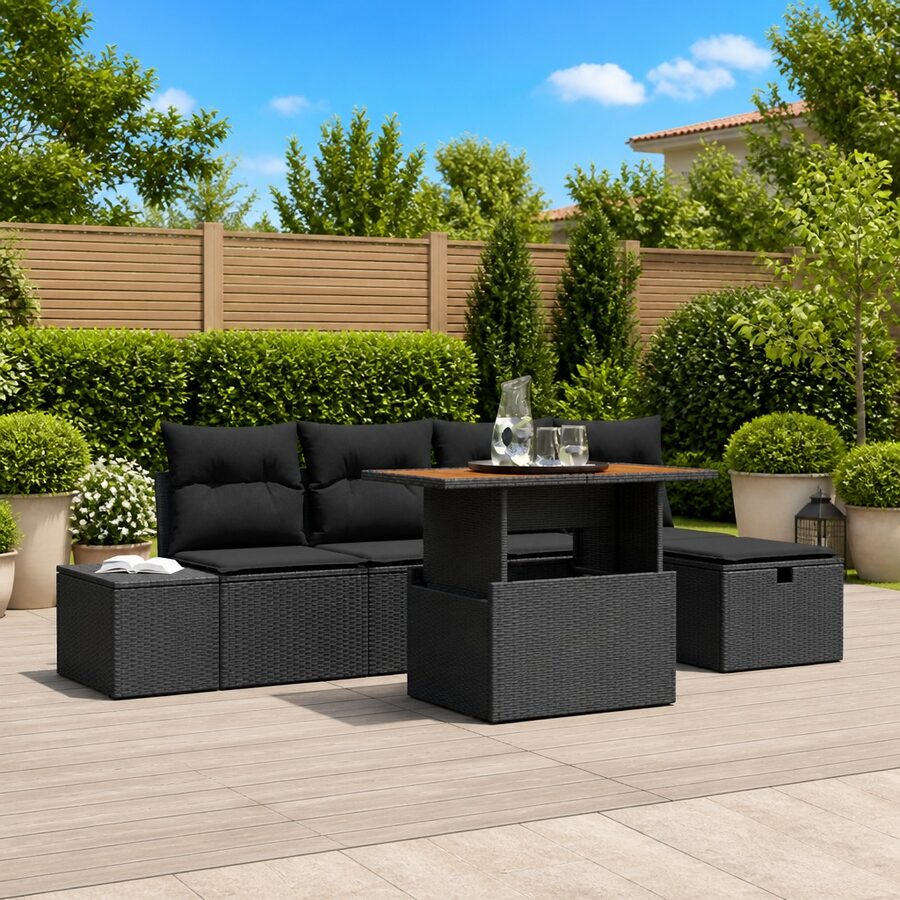
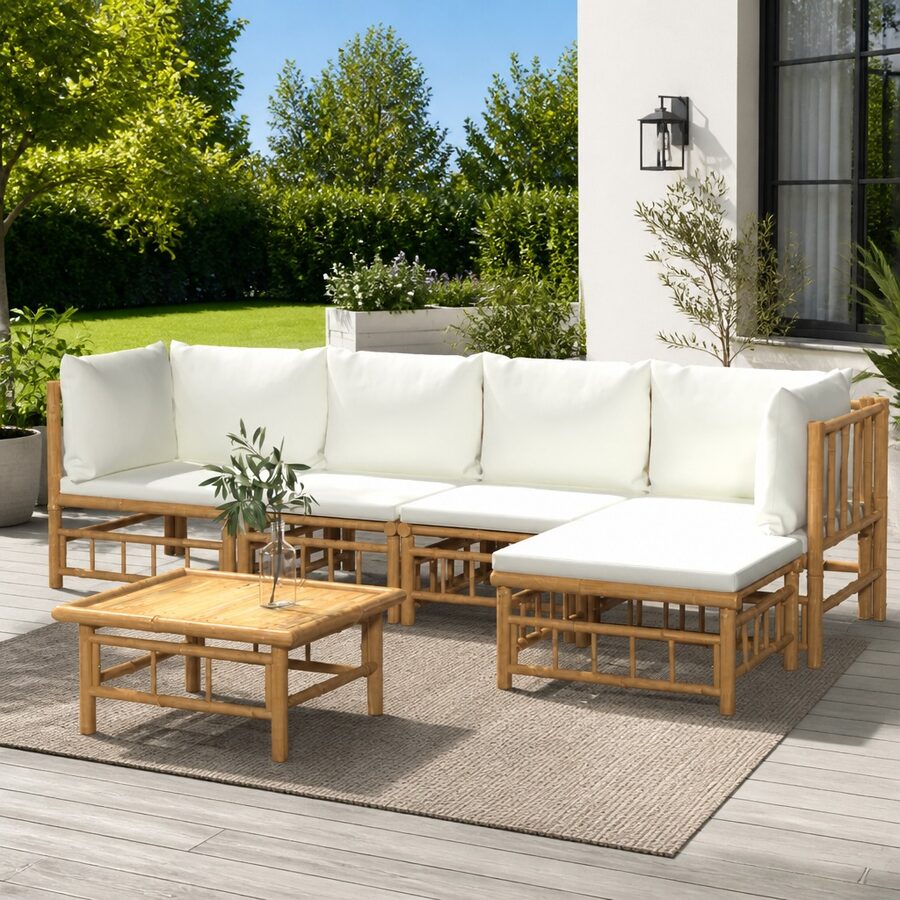
But it’s not always the right call. If you’re kitting out a small unit balcony — say four square metres — this set is overkill. That’s when I’d point people to the 6-piece bamboo garden lounge set instead, or if the ground’s uneven or the household has back trouble, the height-adjustable poly rattan sofa set which lets you raise the seat height, something the fixed-frame pinewood set can’t do.
Fitting it to a real space
Before ordering, measure for the U-shape configuration fully open, not folded down small — it’s roughly 3.2m across when fully extended with the coffee table in the middle. If your courtyard, deck or communal area is narrower than that, plan to split the modules into two separate seating clusters rather than forcing the full U into a tight corner. It still works fine split; it just needs the floor space mapped out first, chalk-marking the corners before the boxes arrive saves an afternoon of shuffling furniture around afterwards.
What we’d tell you if you rang us
For share houses, rental furnishing packages, cafe courtyards or apartment common areas, this set earns its keep because it flexes with the space rather than dictating a fixed footprint. It’s not the lightest set to move once assembled — solid pine has real weight to it — so decide on final placement before you bolt the last piece together. And if the space gets heavy sun with zero shade, factor a yearly reseal into your maintenance calendar the same way you would for a timber deck or fence. Do that, and the frame will be the last thing that needs replacing, long after cheaper plastic settings have cracked and gone in the skip.