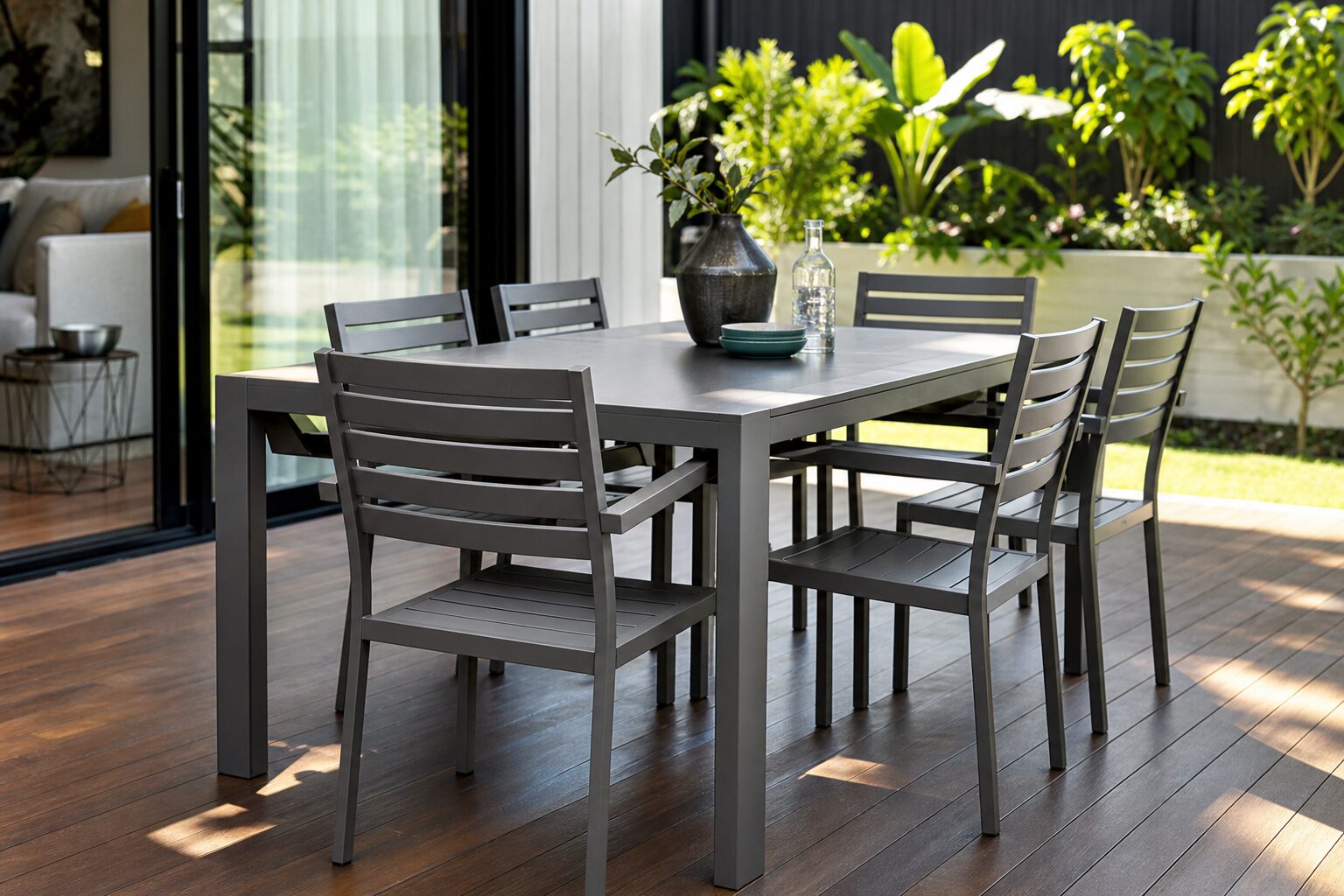
Had a customer call last month asking whether a 9-piece set would “just look better” than the 7-piece on her back deck. Measured it out with her over the phone — turns out her deck was 2.8m wide. A 9-piece table needs closer to 3.4m of clearance once you account for chairs pulled out. She ended up with the 7-piece and had 400mm to spare on each side. Small thing, but it’s the difference between furniture that works and furniture you’re squeezing past for the next ten years.
Picking between a 3-piece, 7-piece or 9-piece outdoor dining set isn’t really about which one looks nicest in a photo. It’s about how many people you’re actually feeding, how much concrete or decking you’ve got, and what you’re using the space for — a quiet balcony coffee spot or a Sunday roast for the whole extended family.
What Each Set Size Is Actually Built For
3-Piece: The Small-Footprint Option
A 3-piece set is one table plus two chairs — sometimes a small bistro table with a slightly bigger footprint for two. It’s the go-to for apartment balconies, narrow courtyards, or a granny flat where you need somewhere to eat breakfast without hauling furniture through a door that’s barely 800mm wide.
The Comfortable 3 Piece Dining Set is the one we point rental property managers toward when they’re furnishing a one or two-bedroom unit. It fits in tight, doesn’t dominate a small outdoor space, and the per-unit landed cost is low enough that furnishing twenty units doesn’t blow the budget.
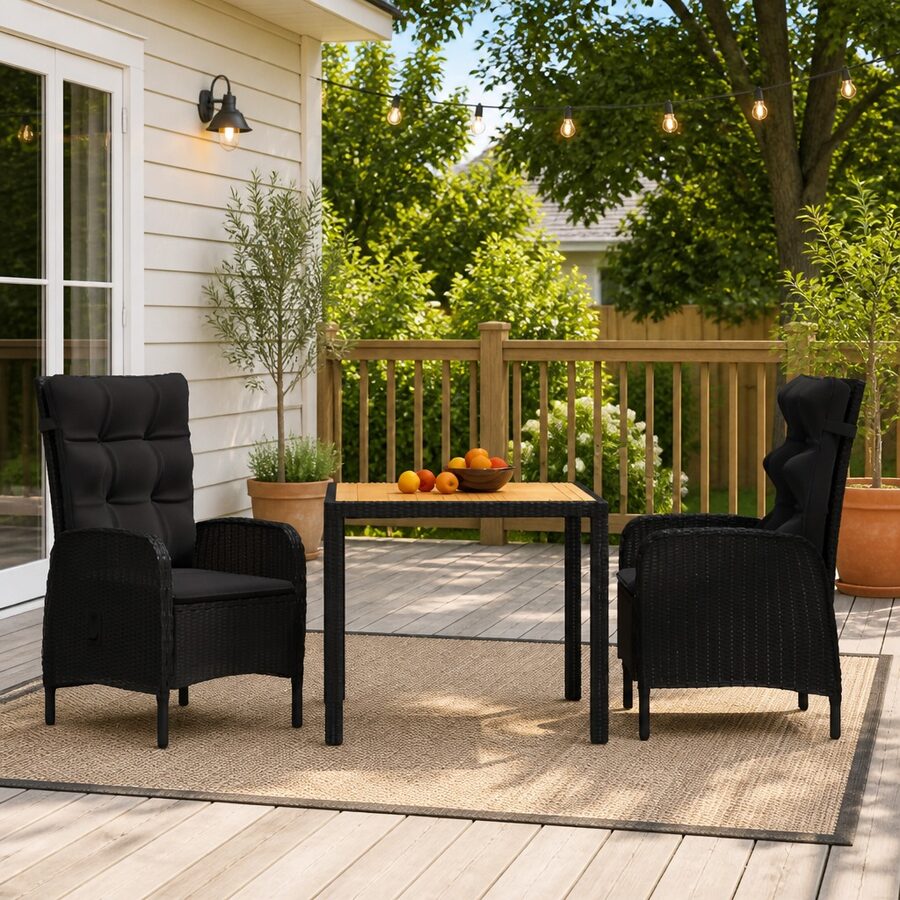
Where it falls short: if you’ve got four adults trying to eat dinner outside, a 3-piece set turns into a queue. It’s genuinely a two-person setup, not a “squeeze in a few extra chairs” setup.
7-Piece: The Middle Ground Most People Actually Need
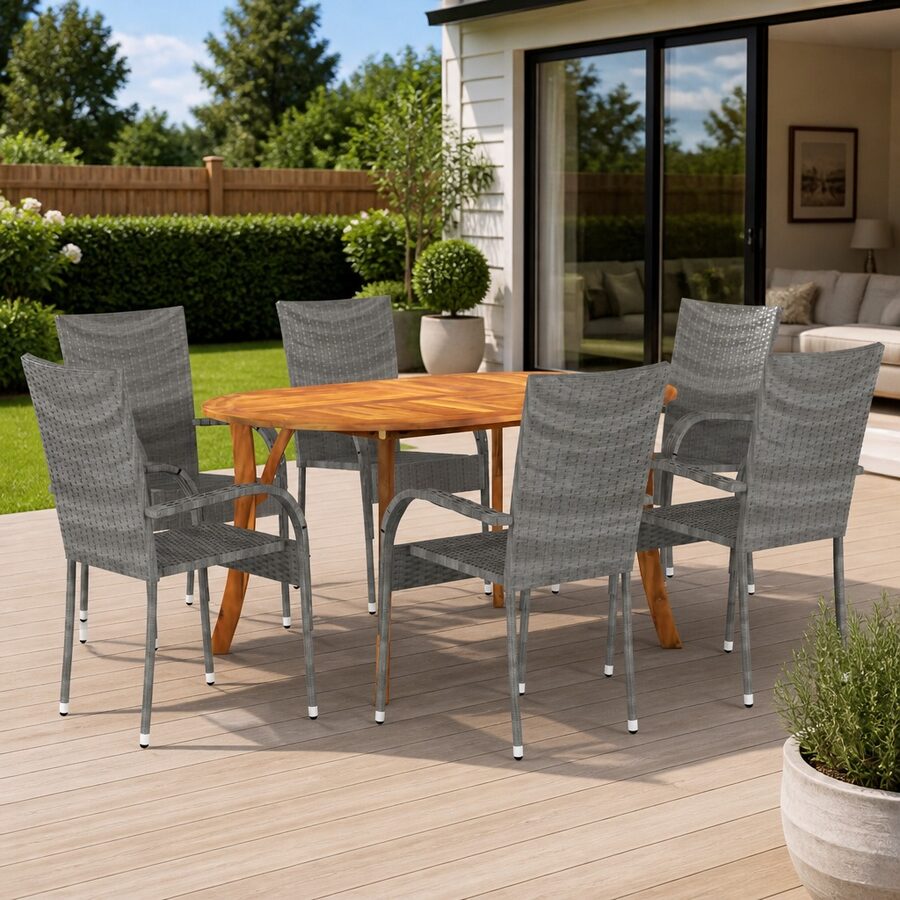
A 7-piece set — one table, six chairs — is the sweet spot for most Australian backyards, courtyards and standard patios. It seats a family of four to six comfortably, with enough table length for shared platters, a jug of something cold, and actual elbow room.
The Value-Driven 7-Piece Grey Dining Set sits in this bracket, and the grey finish is doing more work than it looks like on the surface. Grey powder-coated frames and grey-toned tabletops hide dust, pollen and the general grime that outdoor furniture copes with in Australian conditions far better than white or black does. You’re not out there wiping it down every second day.
This size works for:
- Standard suburban patios and alfresco areas (roughly 2.6m x 2.6m or larger)
- Small cafes wanting two or three outdoor tables without overcrowding the footpath permit area
- Airbnb and holiday rentals where six-seat capacity matches the sleeping capacity of a typical 3-bedroom house
- New builds where the alfresco slab was poured before anyone measured furniture against it
The trade-off against a 3-piece is obvious — more floor space needed, higher unit cost. But per seat, a 7-piece set is usually the most efficient buy in the range. You’re not paying for capacity you’ll never use, and you’re not turning people away at Christmas lunch either.
9-Piece: When You’re Actually Feeding a Crowd
A 9-piece set — one table, eight chairs — is built for entertaining. Big family gatherings, shared house dinners, cafes with a genuine outdoor dining area rather than a couple of token tables. The Comfort and Value 9 Piece Outdoor Dining Set is the one we recommend when someone tells us “we regularly have ten-plus people over” or when a venue needs one solid outdoor table that does the job of two smaller ones.
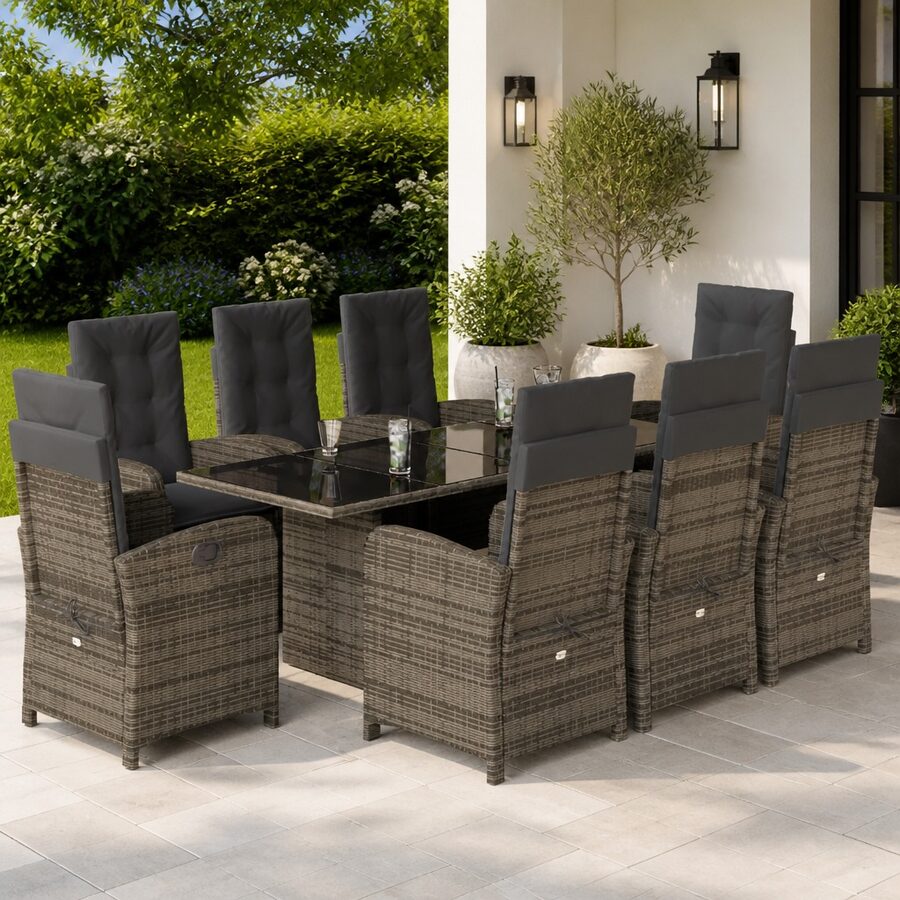
The catch is space and access. You’ll want at least 3.4m of clear width and ideally a wide gate or double doors for delivery — these tables don’t fold up small. If you’re fitting out a commercial space, check your outdoor dining permit area against the table’s actual footprint before you order, not after it arrives on a pallet.
Landed Cost Per Seat: The Number That Actually Matters
When you’re kitting out more than one property — a block of rental units, a café strip, a new estate of townhouses — the sticker price on a set means less than the cost per seat once freight and handling are in. A 9-piece set costs more upfront than a 3-piece, but if you need eight seats anyway, buying one 9-piece set beats buying three separate 3-piece sets and losing table space to duplicate legs and edges.
Run the numbers before you decide:
- 3-piece: cheapest entry point, ideal per-unit for small footprints, but poor value if you actually need more than two seats
- 7-piece: best all-round cost per seat for most residential and small hospitality use
- 9-piece: highest total cost, but the strongest cost-per-seat if your headcount genuinely justifies it
Material and Weather Notes That Apply Across All Three
Whichever size you land on, check the frame material and tabletop finish against your climate, not just your budget. Coastal properties chew through cheap coated steel fast — salt air gets into any nick in the coating within a season. Powder-coated aluminium frames or treated steel with a proper UV-stable finish last considerably longer outdoors, particularly in Queensland and coastal WA where UV exposure is brutal year-round.
Tabletops matter too. Tempered glass looks sharp but needs shade or a cover in hail-prone regions. Composite or coated timber-look tops handle direct sun better and don’t need a table cloth to stop them scorching bare skin at 40 degrees.
If you’re furnishing multiple properties at once, it’s worth ordering one set first, living with it outdoors for a few weeks, then committing to the bulk order. Chairs that look fine in a warehouse sometimes reveal a wobble or a scratchy weld only after they’ve sat through a few backyard barbecues.